
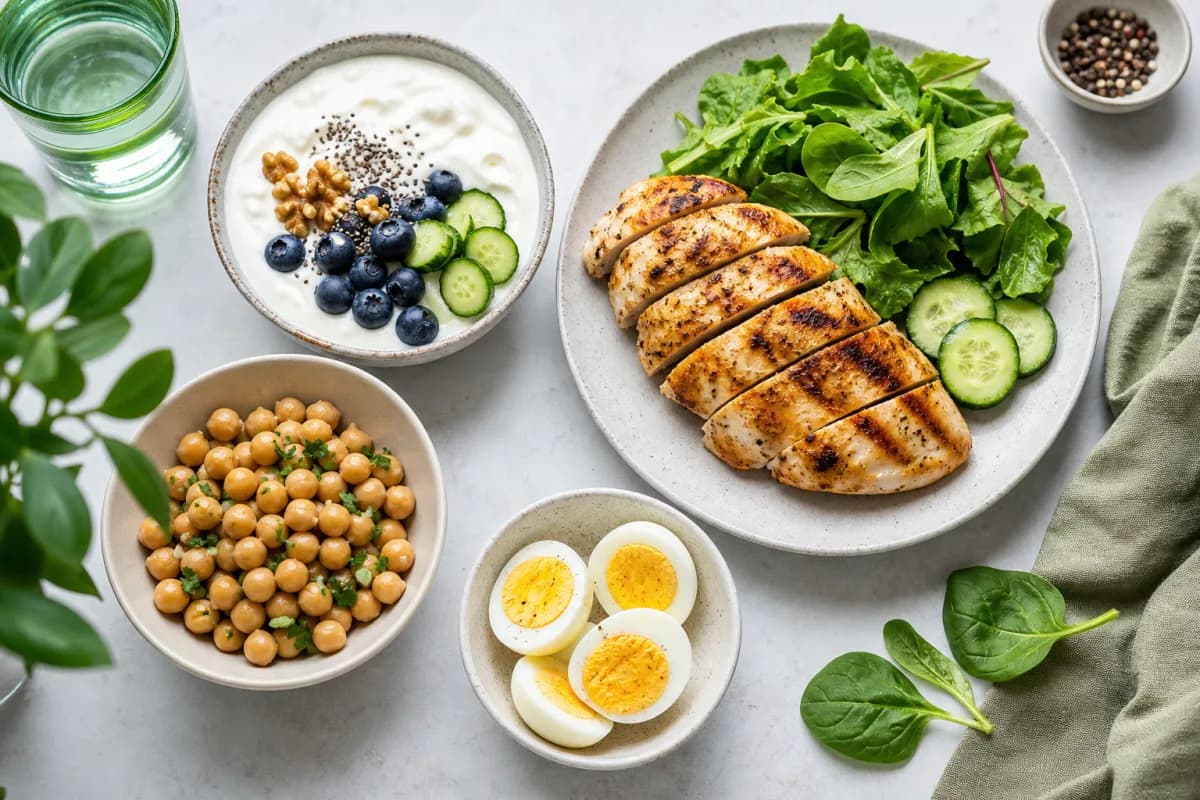
"I know I need more protein" is the most common nutrition confession — and the least acted on.
Busy professionals face a specific problem: the default office diet (toast for breakfast, salad for lunch, pasta for dinner) rarely clears 100g of protein, let alone the 130–160g recommended for fat loss or muscle gain.
A high-protein meal plan doesn't require grilling chicken for four hours on Sunday — and with NoroMeal, your protein target is calculated from your profile automatically. It requires knowing your target, picking the right shortcuts, and structuring your week so protein happens by default — not by willpower at 9 PM.
Why protein matters (especially when you're busy)
Protein does three critical jobs:
- Satiety — keeps you full longer than carbs or fat per calorie
- Muscle preservation — especially important during fat loss or high-stress periods
- Stable energy — avoids blood sugar crashes that lead to afternoon snacking
When you're rushing between meetings, high protein is the difference between feeling satisfied at lunch and raiding the snack drawer at 3 PM.
If your meal plan doesn't prioritize protein at every meal, you're fighting hunger with discipline — and discipline always loses eventually.
How much protein do you actually need?
| Goal | Protein target |
|---|---|
| General health | 1.2g per kg body weight |
| Fat loss | 1.6–2.2g per kg |
| Muscle gain | 1.6–2.2g per kg |
| Very active / training hard | Up to 2.2g per kg |
Quick math: 75 kg person targeting fat loss → 120–165g protein daily → 30–40g per meal across 4 meals.
The busy professional's high-protein meal plan framework
Rule 1: Protein at breakfast (non-negotiable)
Most people eat 10–15g protein at breakfast and wonder why they're starving by 10 AM. Fix this first:
- 3 eggs + toast → ~22g protein (5 min)
- Greek yogurt (200g) + berries → ~20g protein (2 min)
- Protein oats (oats + scoop of whey) → ~30g protein (5 min)
- Smoked salmon on rice cakes → ~25g protein (3 min)
Rule 2: One high-protein anchor lunch
Pack or order lunch around a 40g+ protein centerpiece:
- Chicken breast bowl with rice and veg
- Tinned tuna + large salad + beans
- Deli turkey wrap with double meat
- Leftover dinner protein (always cook extra)
Rule 3: Double protein at dinner without double cooking
- Add a side of cottage cheese or Greek yogurt
- Use rotisserie chicken instead of cooking from scratch
- Keep frozen fish fillets (bake 15 min, ~30g protein)
- Add a can of lentils or chickpeas to any meal (+15g protein)
Rule 4: Smart snacks only if needed
If meals cover your target, skip snacks. If not:
- Protein bar (check label — aim 15–20g, not candy with protein dust)
- Beef jerky or turkey slices
- Hard-boiled eggs (prep 6 on Sunday, grab all week)
- Edamame, cottage cheese, or skyr
Sample high-protein day (~150g, minimal cooking)
| Meal | Food | Protein |
|---|---|---|
| Breakfast | 3 eggs, toast, coffee | ~22g |
| Snack | Greek yogurt | ~15g |
| Lunch | Rotisserie chicken quarter + rice + salad | ~45g |
| Snack | Protein bar | ~20g |
| Dinner | Pan-fried salmon + frozen veg + microwave rice | ~40g |
| Total | ~142g |
Cooking time: under 20 minutes total if chicken is pre-bought.
High-protein shortcuts for zero-time days
Keep these stocked for emergency high-protein days:
- Rotisserie chicken (lasts 3 days)
- Tinned tuna, salmon, or sardines
- Greek yogurt (large tub, lasts the week)
- Frozen chicken strips or fish fillets
- Protein powder (not a meal replacement — a gap-filler)
- Hard-boiled eggs (batch once, eat all week)
- Cottage cheese or skyr
Common high-protein meal plan mistakes
- Relying on protein powder for half your intake — whole food first, powder to fill gaps
- Skipping breakfast protein — sets up hunger all day
- "Salad for lunch" without protein — 8g protein and a crash by 2 PM
- Only eating protein at dinner — impossible to hit 150g in one meal comfortably
- No plan — protein targets need meal structure, not improvisation
Get a high-protein meal plan built for your schedule
NoroMeal generates a weekly meal plan with your protein target calculated from your goal and body metrics — and matches recipes that hit your daily macros without hours of meal prep.
Tell us your preferences once. Get a high-protein plan that fits your actual week.