
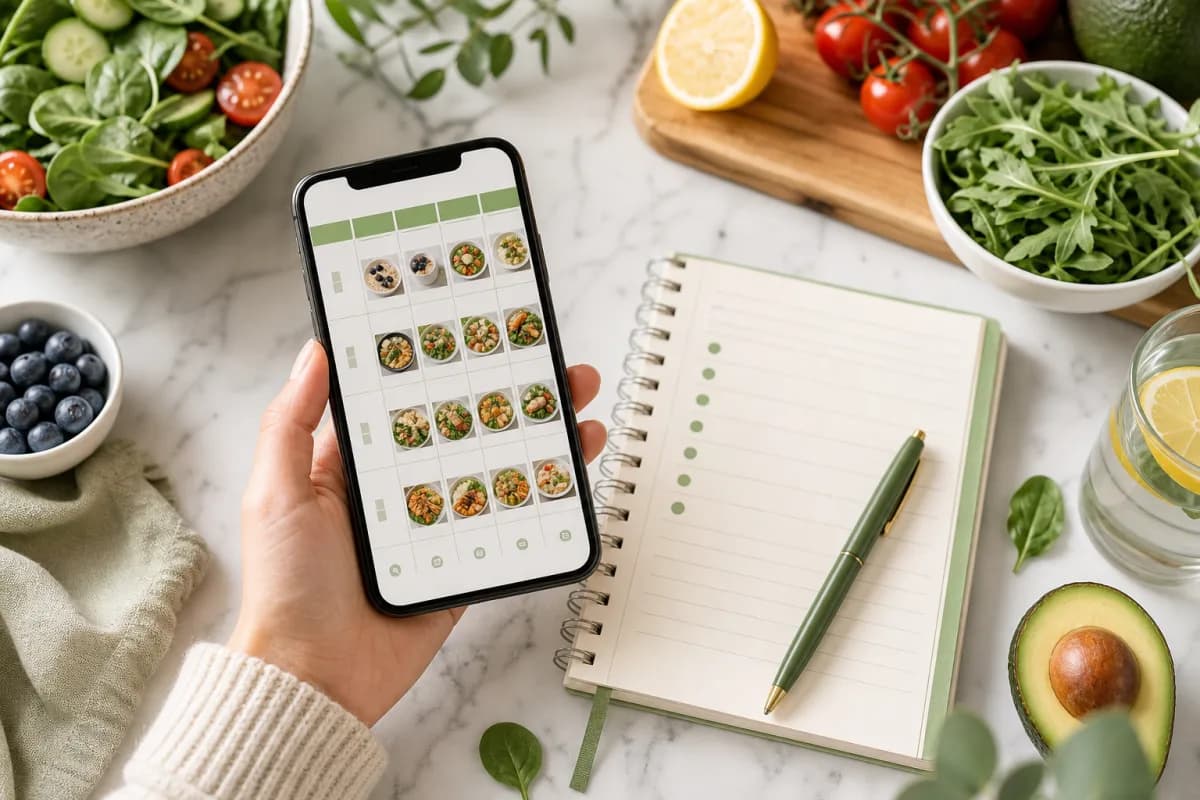
Search for "meal plan" online and you'll find the same PDF repeated a thousand times: 1,500 calories, chicken and broccoli, repeat until you quit.
That's not a meal plan. That's a template — and templates fail because your body, schedule, and taste buds aren't generic.
A personalized meal plan is built around you: your calorie target, macro split, food preferences, activity level, and the meals you can actually cook on a Tuesday night. Here's how it works, why it beats one-size-fits-all diets, and what to look for when choosing one.
What is a personalized meal plan?
A personalized meal plan is a structured weekly eating guide calculated from your inputs, not a celebrity's:
- Body metrics — height, weight, age, sex
- Goal — fat loss, maintenance, muscle gain
- Activity level — sedentary desk job vs. active training schedule
- Food preferences — what you like, avoid, or can't eat
- Lifestyle constraints — time to cook, number of meals per day
The output is a daily calorie target, macro breakdown (protein, carbs, fat), and specific meals or recipes that fit those numbers — organized across the week so you're not starting from scratch every morning.
A personalized meal plan answers "what should I eat today?" before you get hungry — not after.
Why generic diets fail (even good ones)
Popular diets — keto, paleo, intermittent fasting, "clean eating" — share a common flaw when applied blindly: they ignore individual variation.
Two people following the same 1,800-calorie plan can have completely different outcomes:
- One person needs 2,200 calories to maintain; 1,800 leaves them exhausted and bingeing on weekends
- Another needs 1,600 to lose fat; 1,800 stalls progress for months
- A high-carb plan wrecks energy for someone insulin-sensitive; a low-carb plan kills performance for an athlete
Generic plans also ignore adherence — the single biggest predictor of long-term success. If you hate the food, you won't follow it. Personalization fixes that by building around meals you enjoy.
The 4 pillars of effective personalization
1. Accurate calorie targets
Your daily energy needs depend on basal metabolic rate (BMR), activity, and goal. A plan that uses a random "1,500 cal for everyone" number will miss — sometimes by hundreds of calories.
What good looks like: Targets calculated from your profile, with a sensible deficit (typically 300–500 kcal below maintenance for fat loss) or surplus for muscle gain.
2. Macro balance matched to your goal
Calories matter most for weight change, but macros matter for how you feel and perform:
- Protein preserves muscle during fat loss and supports recovery
- Carbs fuel training and brain function
- Fat supports hormones and satiety
A personalized plan sets all three — not just a calorie number.
3. Recipes you will actually eat
The best macro math in the world fails if dinner is a meal you dread. Personalization means filtering by:
- Foods you like (and excluding ones you avoid)
- Cooking time that fits your schedule
- Meal types that match your routine (quick breakfasts, packable lunches)
4. Weekly structure, not daily chaos
Personalized doesn't mean a new menu every day. It means a weekly plan with enough variety to stay interested and enough repetition to stay consistent — the same balance that makes meal planning sustainable.
Personalized meal plan vs. meal planning app vs. nutritionist
| Approach | Best for | Limitation |
|---|---|---|
| DIY spreadsheet | Data lovers with time | High effort, easy to abandon |
| Generic PDF plan | Absolute beginners | Ignores your specifics |
| Meal planning app | Busy people who want automation | Quality varies by app |
| Registered dietitian | Medical conditions, complex needs | Cost and access |
For most healthy adults with clear goals, a meal planning app like NoroMeal that generates personalized weekly plans hits the sweet spot: accurate enough, fast enough, affordable enough.
How to build your first personalized meal plan
- Define your goal — be specific (lose 5 kg in 12 weeks, not "get healthy")
- Calculate your targets — use a reputable TDEE calculator or app
- Audit your week — when do you eat, cook, and shop?
- Pick 5–7 base meals that hit your protein target and you enjoy
- Assign meals to days — build the week, not just Monday
- Shop once — one list, one trip, fewer impulse orders
Or skip steps 2–5 entirely and let software handle the math and matching.
Get a personalized meal plan in minutes
NoroMeal generates a weekly meal plan from your body metrics, goal, activity level, and food preferences — with daily calorie and macro targets and recipes matched to fit.
No generic PDF. No guesswork. Just a plan built for you.